



Senior columnist Caleb Eldridge shares his insight in leadership, faith and the many complexities of teens today. This column continues on this year’s theme verse of Philippians 4:8, and this time the focus is on nobility, a lost term that needs to make its return.
“Noble” isn’t one of the initial adjectives we often think of to describe people. It is a word that has lost popularity in the English language. The word reached its peak in the 1600s, but is currently at its lowest usage since that point. I believe that the term “noble” needs to be reintroduced into our lives and needs to resurface from its collapse back in the 1600s.
When the word “noble” was in its highest usage, the definition was entirely different. The definition back then meant: “belonging to a hereditary class with high social or political status.”
The definition of noble in today’s terms is: “Having or showing fine personal qualities or high moral principles and ideals.” With this definition, being noble essentially boils down to being a good person and having high moral standards. What is an example of high moral standards?
I believe that one of the highest moral standards possible is the standard of integrity. This means doing what is correct even when no one knows, holding on to your beliefs in the face of adversity and danger, and staying true to what is right in times of trouble.
One of the most prominent characters that shows nobility and high morals is John Proctor from “The Crucible,” written by Arthur Miller. Although the story was set in 1692, the story was written in 1953. Since it is written in 1953, we can see the modern examples of nobility being emanated in this story.
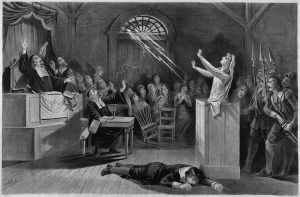
During 1692, the Salem Witch Trials were a colossal piece of society, where people were pointing fingers, calling everyone they feared a witch. Throughout the events of the story, John Proctor is trying to cover up his sin of adultery, when he cheated on his wife, Elizabeth, with his servant, Abigail. Abigail, however, covers the tracks of her sin in a different way, accusing people of witchcraft to take the limelight off of her. The longer Abigail covers her tracks and the more people she accuses, the more powerful and influential she becomes, which ultimately leads to the deaths of many innocent people.
In the climax of the story, Proctor confesses to his sin, but is unfortunately accused of witchcraft by Abigail and her friends. After John is arrested and condemned to death, he is given the opportunity to free himself if he would only accuse someone else of witchcraft. John demonstrates integrity by not blaming anyone else to avoid accountability; instead, he takes on the repercussions of his mistakes, remains honest, and shows nobility.
We can see that nobility, by today’s standards, is doing what is good and honest.
If we combine the two definitions of noble, we can surmise that the definition is more along the lines of “a person with power who shows good moral character and has good ideals, using their power for the good of the people.”
Now, let’s look at an example of nobility done incorrectly. William Shakespeare wrote the story of “Macbeth“ in 1607, inspired by the Scottish king Macbeth in the 11th century. This story is not historically accurate; however, as Shakespeare often did, it dramatized the events that took place in the story. This Shakespearean story reflects the fall of nobility, in both the old definition and the new. Macbeth begins as a good man, a loyal general to his king who obtains a title of nobility from that king, being Thane. He follows the king loyally as a Thane until he learns of the prophecy in which he can obtain more power, a prophecy that will make him king of Scotland. This promise of power destroys his moral standards, as he murders the king he once loyally served, making him entirely unlike the noble man he was before.
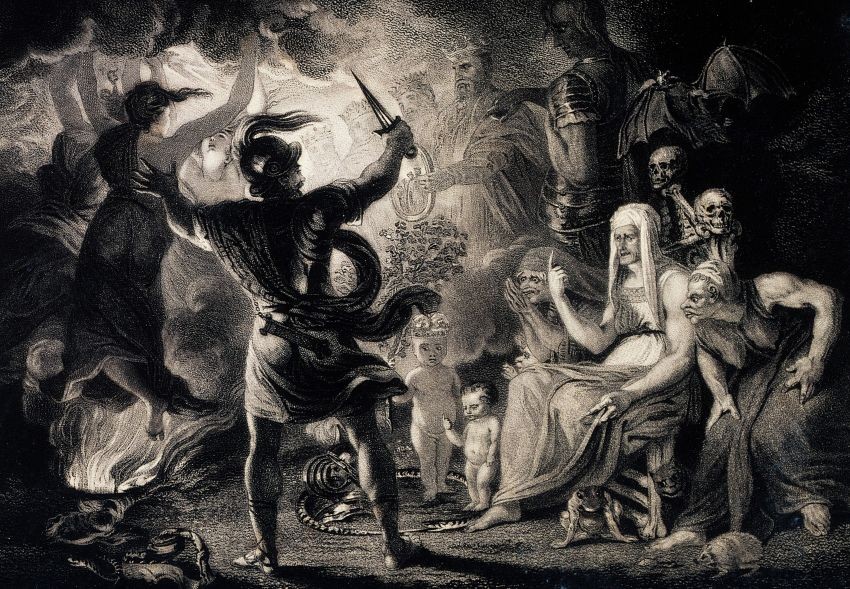
We can also see from this story that losing your morals, and therefore your nobility, isn’t an immediate process. It happens gradually over time. Although Macbeth lost his nobility quickly by murder of the king, he continued to fall from greatness as he murdered more and more people and abused his power, giving him less and less chances to re-obtain the morals that he once held so highly. Nobility can be lost just as quickly as it is obtained.
Exiting the realm of stories and entering the realm of history, nobility was a huge part of medieval history. The most popular and well-known structural hierarchy in Medieval Times was the feudal system. The feudal system was shaped like a triangle, with the top part being the smallest part of the population and the bottom part being the largest. At the top was the monarch, the king or queen, followed by the nobility, then the knights and at the bottom of the hierarchy were the common folk, called peasants.
Why am I describing this social hierarchy that went out of style in the French Revolution of 1789? Simply put, the idea of this type of nobility, this feudal system, is still in effect today. While not in politics and government, it’s in our lives in a different way.
It is present in our social lives. It’s in our friend groups, in our schools and in our sports. There’s a hierarchy that we place ourselves in. That’s our modern-day nobility. There are roles in your friend group, in your school and in your sports, and you fulfill each of those roles with our modern-day nobility.
Hypothetically, let’s say in your friend group, you plan a lot of events for you and your friends. This would place you high within the nobility, as you decide the events and figure out what the rest of the group should do. Or, in school, if you’re in the student council or in the leadership team, you help plan and decide things for the student body, also placing you high within the hierarchy of the students around you. In sports, if you’re a team captain, your job is to lead the other players and your peers with strength, courage and determination, putting you high within the nobility of your team.
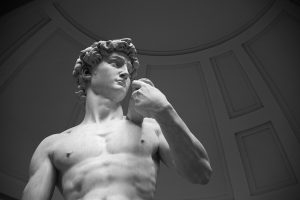
As a final example, what does nobility look like in The Bible? The best example of nobility is King David, someone who perfectly illustrates all definitions of noble. When he was a boy, David was chosen as the next king of Israel during the reign of Saul. David, however, didn’t have the easiest life after being selected as the next king. Saul was still in power and developed a hatred of David, wanting to kill him to retain his power. When David retreated Israel, the land of his birth and future kingship, he remained faithful to God and remained noble. After Saul died, David returned to Israel and was crowned king.
During the rest of his life, despite his flaws, David remained noble. He is the perfect human definition of true nobility. He was in a place of power, used his power for the good of others, and despite his flaws, attempted to reconcile and make amends to fix those flaws. It’s no wonder David was called “A man after God’s own heart” in 1 Samuel 13:14.
Even though nobility isn’t the same as it was four hundred years ago, it has a new meaning. Today, it is using the power that you have for good, acting in ways that would benefit others, and showing high moral standards, such as integrity and honesty. These actions will put the word “noble” back in style, causing a domino effect that will cause others to act in nobility. This nobility will make habits of integrity, honesty, and goodness, which can change the world for the better.
For more from The Feather, read AI revolutionizes the modern workplace and Students prepare for ‘A Night in Winter Wonderland.’




Jacob C • Dec 1, 2025 at 11:29 am
Fantastic article Caleb! Your historical and biblical examples are great, integrated into a column that has a style unique to you. Keep it up and can’t wait for the next one!