


Fresno Mayor Jerry Dyer calls for I.C.E. to “pull back, regroup, retrain” at the 94th Winter Meeting of the U.S. Conference of Mayors in Washington, D.C., Jan. 28-30.
The conference is an annual assembly of bipartisan city leaders to directly engage with the White House, Congress and federal officials to discuss top policy priorities. To no one’s surprise, the hot topic of the recent forum was Immigration and Customs Enforcement (I.C.E.).The mayor of Fresno did not shy away from speaking up during the press conference. Dyer vocalized his support for the mission of I.C.E. and the broader goals of the Trump Administration, while still calling out the need for accountability.
“We support legitimate enforcement efforts by ICE to remove serious criminals,” Dyer said. “But we want them to be held to the same standard we hold our local police departments to in terms of being professional, well-trained and de-escalating situations if possible.”
The presence of I.C.E. agents and their intervention has intensified drastically with 120% manpower increase due to the Recruitment Campaign. The agency’s numbers doubled from 10,000 to 22,000. The Trump Administration has made secure borders a priority during President Trump’s second term. Close to 2.5 million illegal immigrants have been deported, 1.9 million of those being self-deported, the rest removed by federal enforcement agents.
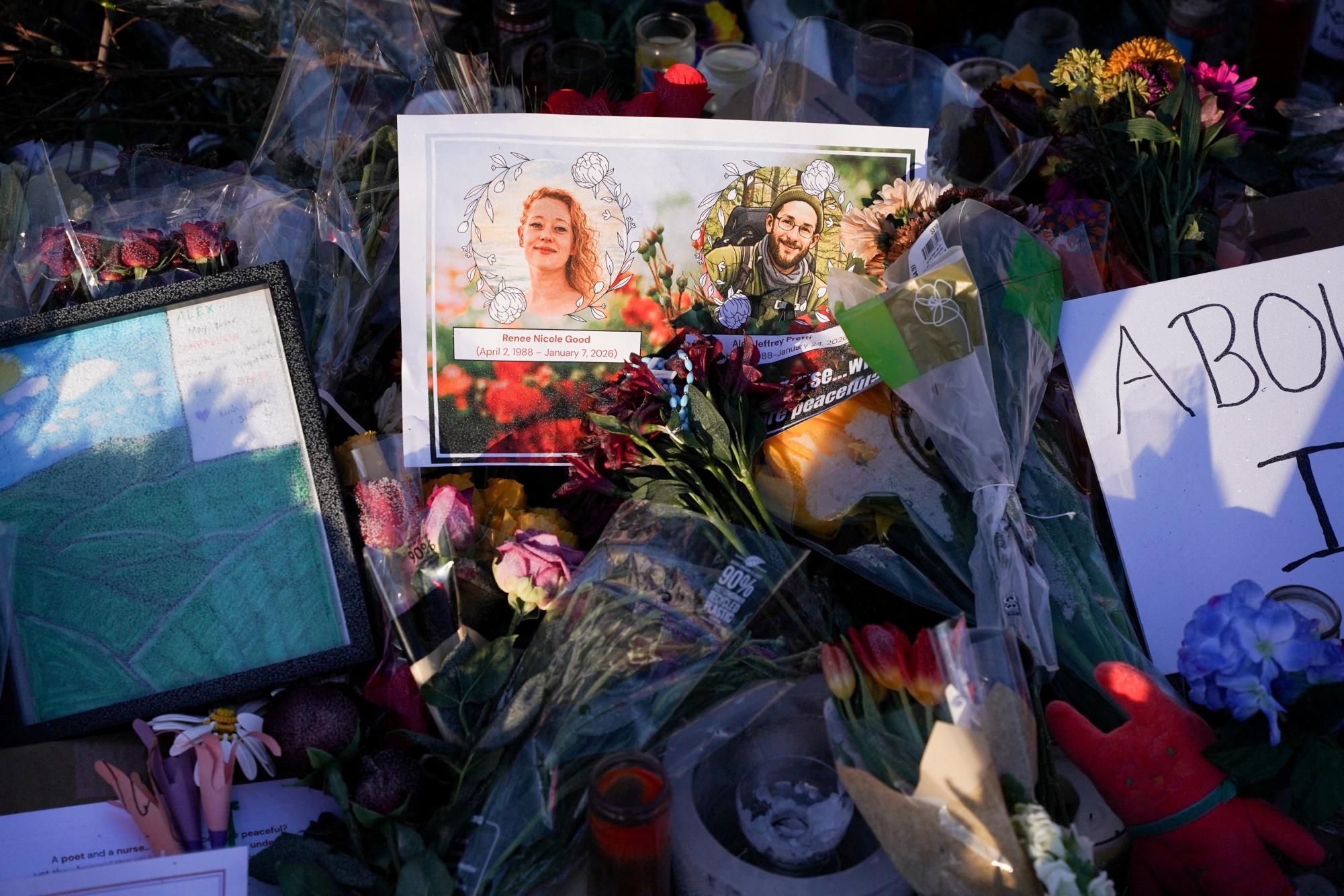
People are not responding well to the change: media platforms are erupting with people’s differing opinions and the streets are lined with upset sympathizers. In several instances, including the case of Renee Good, citizens are interfering with or not complying with I.C.E. agents, creating chaos that may foster danger for both protesters and officers.
With a background in policing – serving nearly 40 years and 18 of those as Fresno Police Chief – Dyer reflects on the delicate nature of trust between law enforcement and citizens. He acknowledges that the federal agents are not being responded to well by community members due to a lack of trust.
“There is one thing I’ve learned that is fundamental for policing and that [is] you have to earn the trust of the people in which you serve,” Dyer said. “And that trust is very delicate and it’s hard to gain and easy to lose.”
In the Fresno-Clovis area, that trust has recently been put to the test. As home to a blended population made up of citizens, immigrants and migrants, the Central Valley, Fresno and Clovis specifically, feels the recoil of nationwide headlines. Recent events, including the deaths of Renee Good and Alex Pretti, have served as a catalyst for local individuals to rally together on street corners, raising their voices to challenge the national enforcement of I.C.E..
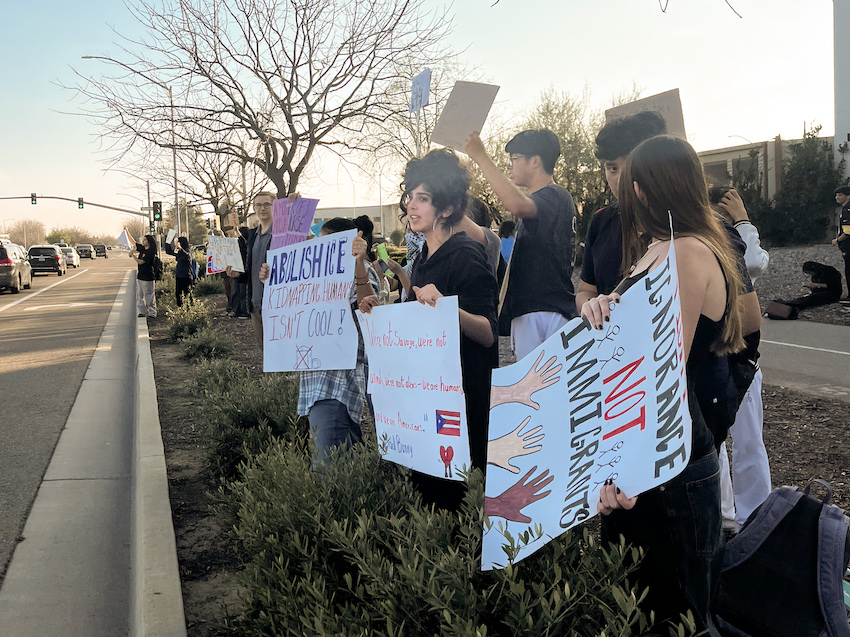
Members of the Fresno community participated in a mass protest on Shaw Avenue and at Fashion Fair Mall, Jan. 30. Hundreds of students walked out of Fresno High School, Bullard High School, Hoover High School, Edison High School and others while several businesses closed in solidarity and signs were raised during the strike against I.C.E.. Despite starting off controlled, the crowd at Fashion Fair Mall grew rowdy and toed the line between peaceful protesting and aggravated antagonizing, causing police presence.
View this post on Instagram
In a local press conference, Fresno County Supervisor Nathan Magsig acknowledges the people’s right to raise their voices, yet recognizes the price of escalation as seen in situations nationally.
“Individuals are more than welcome to protest and voice their concerns,” Magsig said. “But when there is obstruction and individuals are impeding investigations, that, of course, is leading to clashes that are very dangerous.”
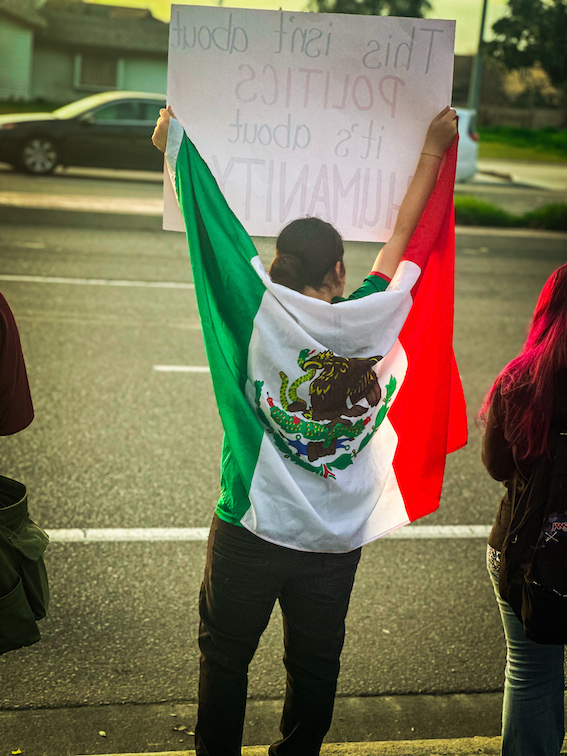
When done respectfully, protesting can be encouraging and effective to rally together communities in pursuit of change. Sixteen-year-old Annalee Mendoza, a student at Buchanan High School, alongside other passionate community members, stood on Willow Avenue to convey their unrest regarding I.C.E.’s actions, Feb. 5. Mendoza comes from a Hispanic background and feels strongly about raising her voice despite being young.
“We are not aliens,” Mendoza said. “We are humans, it’s not about politics, it’s about humanity. It is not about if you stand with Trump or Kamala, but it’s about us as humans uniting and fighting injustice.”
Her beliefs were echoed by fifteen-year-old Unique Garfias, another Buchanan High School student, who spent her Thursday evening raising signs on Willow Avenue.
“I am fighting for the people who do not have a voice; some people just see it as ‘They’re illegals,’ but we’re families,” Garfias said. “These people have hearts. We’re all humans at the end of the day, love your neighbors and they’re your neighbors too.”
As the debate continues on both a local and national stage, learning the language behind I.C.E. enforcement is a crucial step in understanding the issue itself—terms that shape policy, fuel protest and define how communities experience its impact.
For more from The Feather, read Teens turn to Accutane as a last resort for persistent acne or California Voter ID Petition sparks debate.



Tabitha Peters • Feb 11, 2026 at 11:28 am
Great job tying this in locally, Dani. I like that you kept the facts clear and simple.