


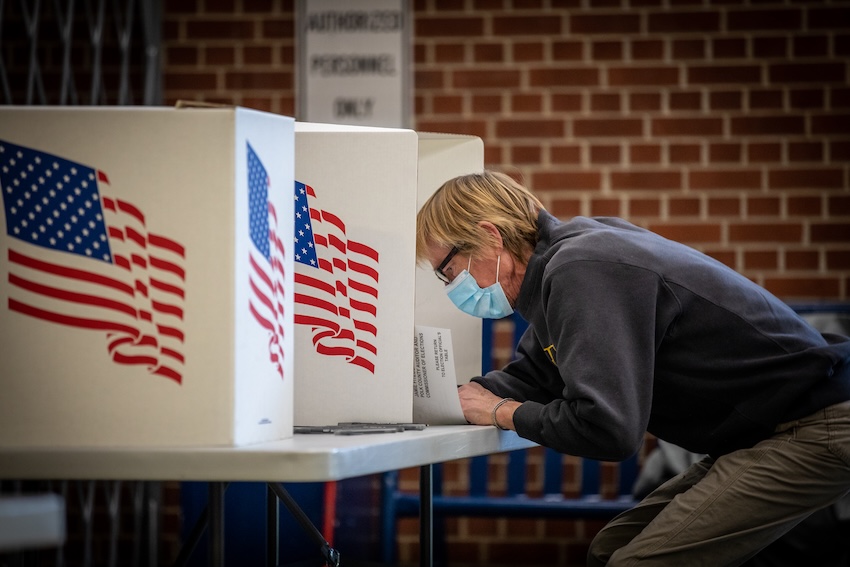
In everyday life, identification is required for many things, such as travel, daily transactions, opening a bank account, driving a car, buying goods and entering a building. Yet no photo ID is required to vote in 14 states. Some local officials and citizens support an initiative to mandate voter IDs and add it to the November 2026 ballot.
Mayor Pro Tem of Clovis and Fresno Christian Alumna Diane Pearce supports the voter ID law.
“Official identification is required for so many things we want to protect,” Pearce said. “So many things that are ‘rights’ also have responsibilities attached to them. Verifying that an individual is a citizen is a responsibility of securing our voting rights.”
Ken Calvert is one of many Republican leaders that has seen an increasing number of petitions supporting a law that would mandate voter ID in order to vote. This initiative would be added to the November 2026 ballot. Calvert made an endorsement on the Californians for Voter ID petition.
“Voter ID is a common sense step that improves election security, which is why it receives broad support among Democrats, Republicans and independents throughout California,” Calvert said. “By passing a Voter ID initiative in California, we can give voters increased confidence in our elections without unnecessarily restricting access to voting.”
To qualify for a spot on the ballot, supporters of the petition are collecting a minimum of one million valid signatures. Organizers hope to collect approximately 1.2 million signatures total to ensure that the petition has enough valid signatures for it to be considered for placement on the ballot.
Advocates like Calvert believe that the present voting methods in California are outdated and at risk for fraud. Calvert’s campaign has been actively promoting the measure and pushing for signatures from California voters who want to see it on the ballot.
“If voting is such a sacred right for citizens in the United States, why would we not want to make sure it is a secure process with a trustworthy outcome?” Pearce said, “If we found there were some citizens having difficulty getting an ID, we would certainly address that and not let anyone be prevented from exercising their right to vote.”
Unlike many other states, California, Hawaii, Illinois, Maine, Maryland, Massachusetts, Nevada, New Jersey, New Mexico, New York, Oregon, Pennsylvania, Vermont and Washington D.C. do not require voter ID.
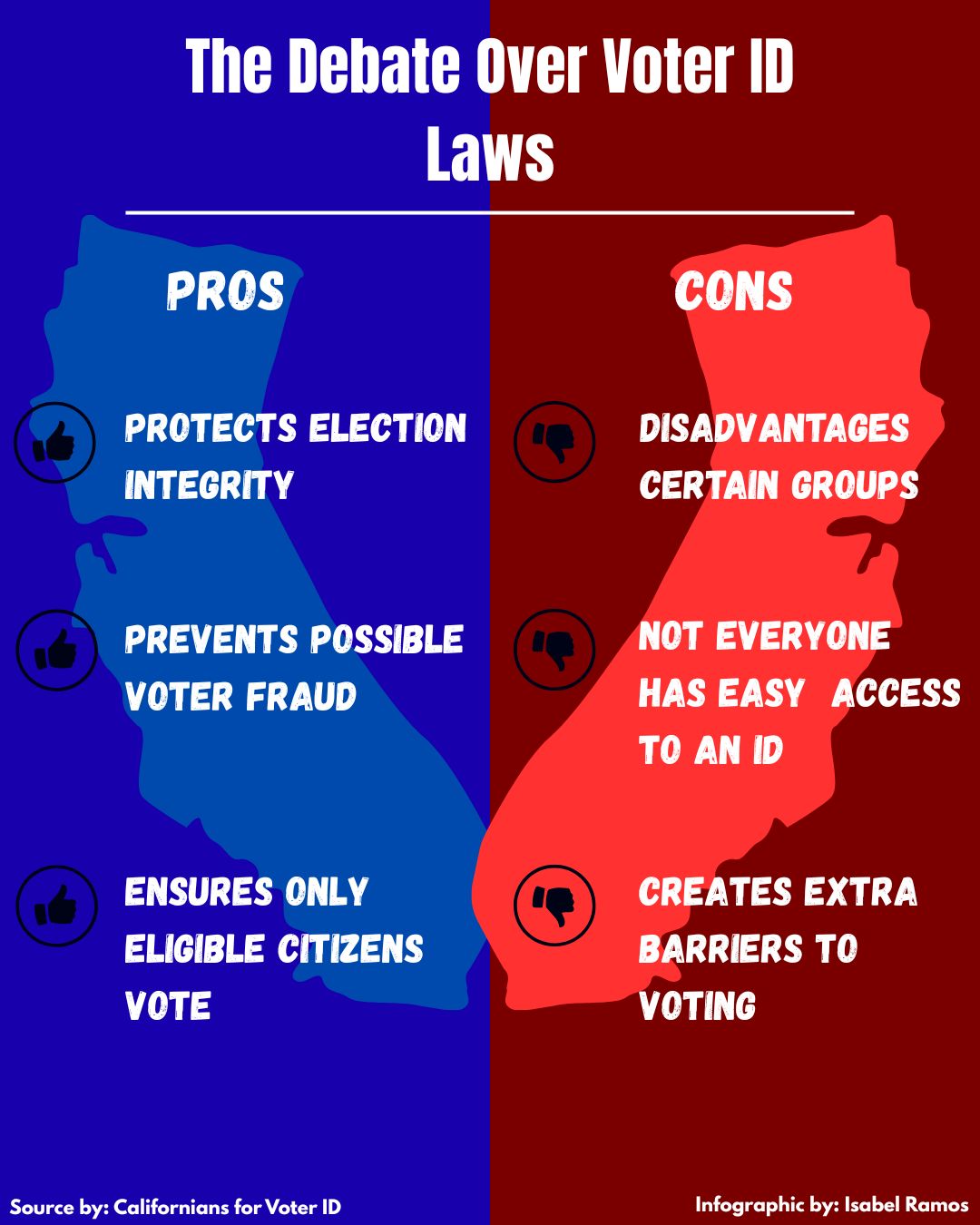
California currently does not require voter identification, allowing voters to simply sign in at their polling location when they are ready to vote at their polls. This signature is then compared to the signature on file in the voter’s registration records.
California state officials support the current election process to be accessible to all voters, but many California lawmakers and advocacy organizations believe that the state should implement a more stringent process regarding voter identification requirements.
Lupe Flores, a candidate for Fresno County Board of Supervisors, District 1, currently serves on the Mendota school board, supporting the idea of a required ID verification.
“When people vote without proper verification, it opens the door to fraud and can cancel out the votes of legitimate voters,” Flores said. “Requiring voter ID protects the integrity of elections and prevents the oppression of lawful voters whose voices deserve to be heard.”
Opponents of the proposal include voting-rights advocates and other organizations. They argue that ID requirements make voting more difficult for voters to cast their ballots, especially among the young, elderly, disabled, or those who do not have easily accessible IDs.
The League of Women Voters of California, which is a nonpartisan, nonprofit organization that opposes strict voter ID laws, argues that the Voter ID can create unnecessary barriers for voters and weaken access to the ballot.
They stated in a hearing last year: “Our laws in these areas are time-tested and carefully constructed to balance safeguarding the voting process with minimizing unnecessary burdens on voters. The LWVC stands for the principle that the right to vote should not be nullified by draconian voter identification requirements, unnecessary documentary proof of citizenship.”
Most Americans of various political differences view voter ID laws as reasonable, but the level of enforcement and specifics associated with these laws vary greatly depending on the jurisdiction.
Fresno Christian Civics teacher Robert Foshee understands both sides of the voter ID debate.
“I understand why some people support voter ID laws, but adding more requirements can also make it harder for people to vote,” Foshee said. “As long as signatures and addresses are being checked, that’s the biggest part.”
The ongoing debate about voter ID laws in California carries the weight of this broader national debate on how to reconcile the security of elections.
For more from The Feather, visit Athlete Spotlight: Bryce Smith receives football All-American and Doomsday Clock ticks down to destruction.


Tabitha Peters • Feb 10, 2026 at 1:15 am
Interesting topic, Isa! I love the infographic, makes it simple to readers.