


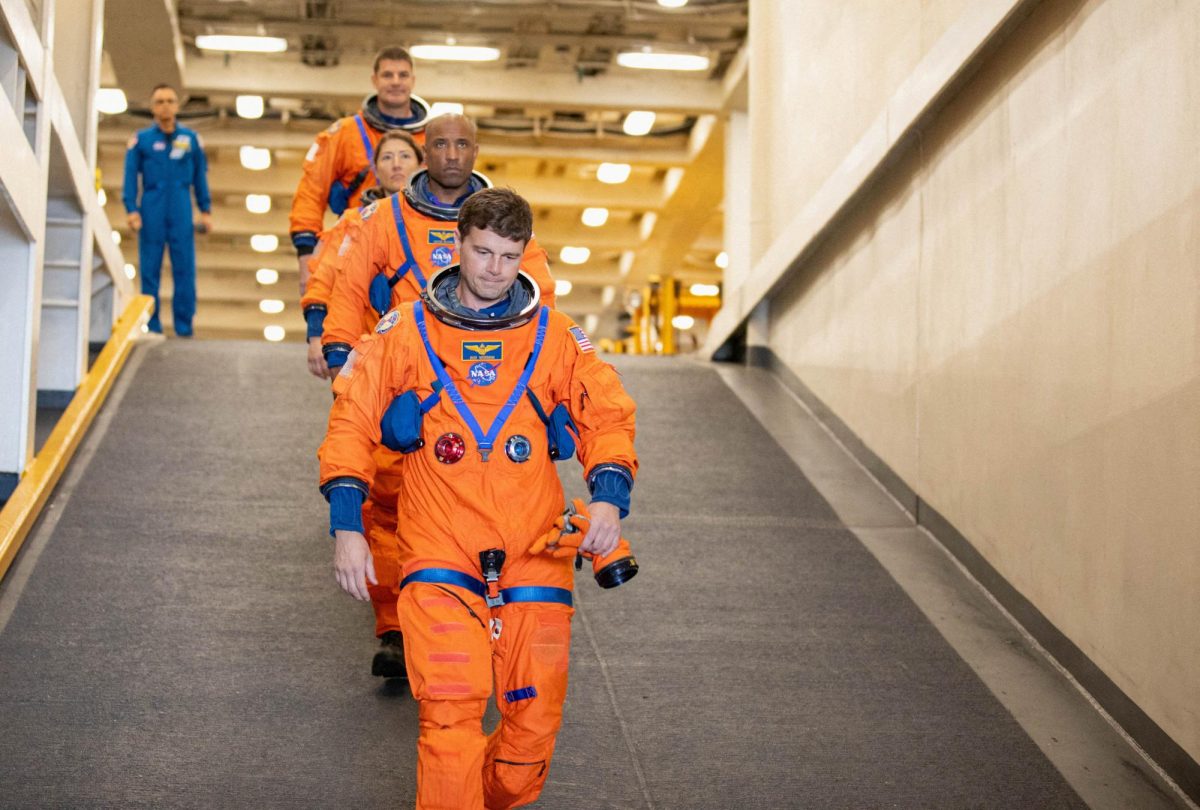
The age of deep-space exploration is back for the first time in over half a century with the Artemis Program. NASA’s upcoming mission, Artemis II, picks up where Apollo 17 left off 54 years ago. The four-person crew is tasked with orbiting the moon in a procedure dubbed a “lunar flyby” and plans to launch no earlier than March 2026. The mission is expected to take approximately 10 days in duration, being the second phase of the four-stage operation.
Jeremy Hansen, the Mission Specialist for the Artemis II mission, will become the first ever Canadian to venture to the moon. Hansen has a fighter pilot background and a Master of Science in physics, exemplifying the extreme qualifications needed for the mission.
“Artemis is the twin sister of Apollo. That is intentional.” Hansen said. “It is to remind us that we are going to go do great things.”
Artemis II builds on the success of Artemis I, an unmanned orbiting mission that launched in late Nov. 2022. The Artemis missions, consisting of four critical stages, plan to have an orbital lunar station set up as early as Sept. 2028. While establishing a lunar station is a wild aspiration in itself, the entire Artemis operation is only the foundation for future missions to Mars.
The Artemis II mission consists of four astronaut candidates (ASCAN): Commander Reid Wiseman, Pilot Victor Glover, Mission Specialist Christina Koch and Mission Specialist Jeremy Hansen. These crew members will launch from the Kennedy Space Center in Florida this March. The mission focus is to successfully, safely and efficiently perform future lunar missions by testing out NASA’s new Orion spacecraft and Space Launch System.
View this post on Instagram
The main fear for this mission stems from the Space Shuttle Challenger disaster in 1986 and the Space Shuttle Columbia disaster in 2003. Both incidents were caused by integral failures and resulted in the death of the seven crew members on board, totaling 14 deaths. NASA assures the public that safety checks will be flawless, even developing a Launch Abort System (LAS), which can safely evacuate the entire crew in milliseconds if a critical problem occurs.
James Emerian, ’26, emphasizes the importance of caution and how dangerous space exploration can be without proper preparation.
“If we are to do anything, they must be 110% sure it is safe,” Emerian said. “Safety is paramount in a hazardous environment, such as space.”
If successful, NASA will move on to Artemis III and plan on the first lunar landing since Apollo 17 in 1972. Artemis III builds on the success of Artemis II, using the fully tested SLS and Orion spacecraft to land a crew at the moon’s southern pole as early as winter 2027. This crewed surface landing is expected to take around 30 days to complete. During this mission, two crew members will descend to the lunar surface and spend roughly a week conducting experiments and collecting samples before rejoining their crew in orbit.

Following Artemis III, the final and most important mission will commence around late 2028. Artemis IV plans on establishing the first-ever lunar station, Gateway, in the Moon’s orbit. By utilizing the newly developed International Habitation module (I-Hab), astronauts will be able to live and work on the station. Gateway will act as an important replacement for the International Space Station (ISS), which is scheduled for decommission and controlled reentry in 2030.
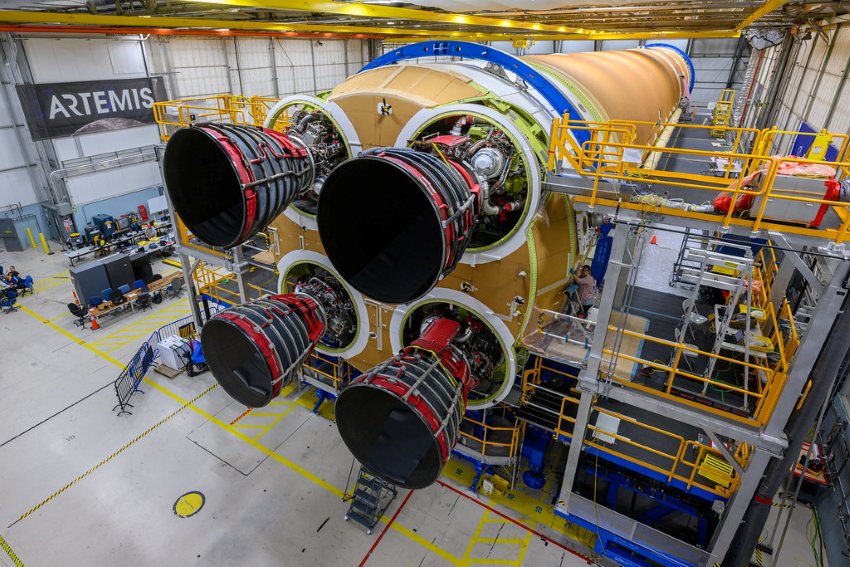
Christina Koch, one of the two Mission Specialists on the Artemis Mission, set a record for the longest single spaceflight by a woman. Koch set the record with a total of 328 days in orbit and participated in the first all-female spacewalks on the ISS.
“I always say to people, do what scares you. And that means I have to follow my own advice.” Koch said. “So doing what scares me…meant applying to become an astronaut, strapping myself onto a rocket, opening the EVA hatch in the airlock and going out of it into the darkness.”
The long-term goal of the Artemis program is to set up future human missions to Mars. These stages will cement human proficiency in deep space exploration, enabling astronauts to venture beyond our Moon. After all, space is the final frontier we have yet to explore.
For more from The Feather, read California Voter ID Petition sparks debate and 2026 movie lineup invokes enthusiasm.


Tabitha Peters • Feb 12, 2026 at 11:09 am
Thank you for this article, Hayden! Space exploration is so interesting.
Garrett Alvis • Feb 12, 2026 at 10:59 am
Awesome job, Hayden such a cool event going on, great job bringing a spotlight to the new mission.