


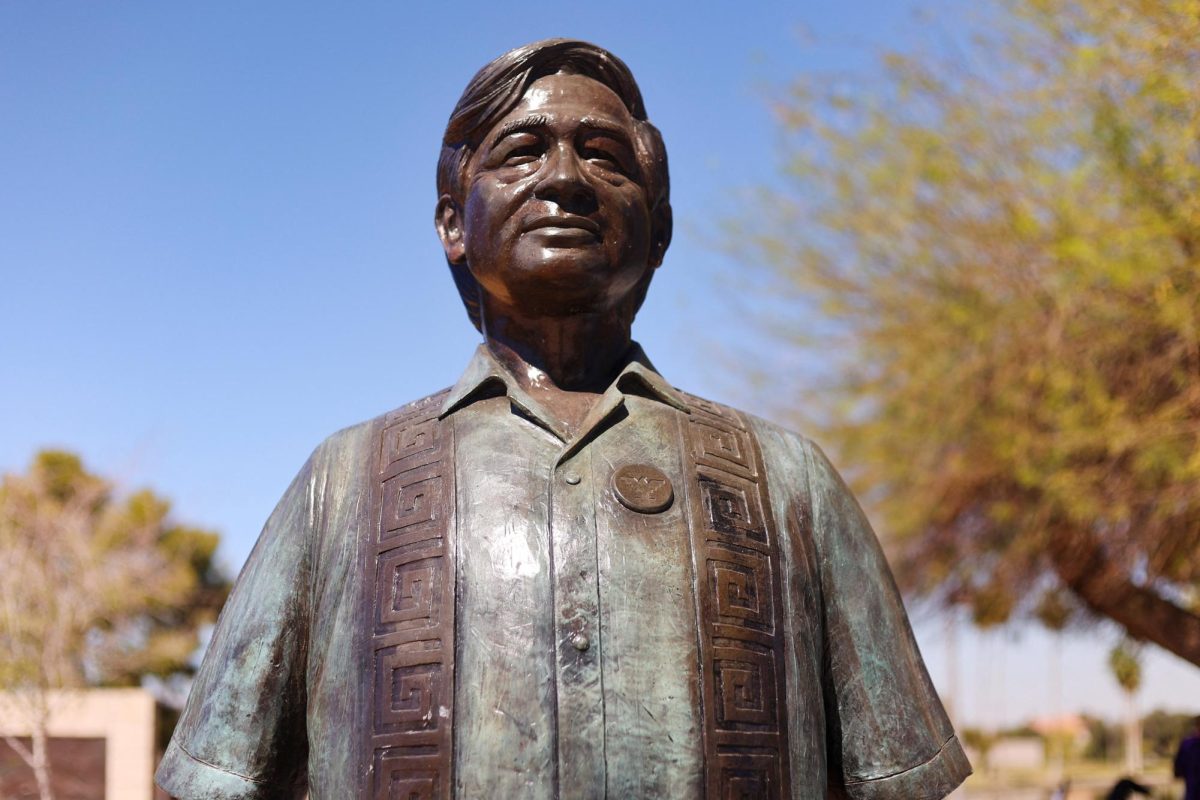
The hot sun beats down on people’s backs as they worked the fields. The distinct stomps ring as people march down streets all around the Central Valley. Voices shout in an attempt to make communities hear their cries of desperation and determination for equality. These moments describe the movement in the 1960s fighting for Latino labor rights led by Hispanic “icon” Cesar Chavez, who is now under fire for rising sexual abuse accusations.
In a recent investigation with The New York Times, multiple women have spoken out against Chavez, claiming he abused them sexually for years during his era of fame and glory. As teenage girls and young women supported the ’60s labor rights movement, the abuse was seemingly hidden for decades due to the fear of hindering the work and progress. Chavez is now being accused of sexual abuse and misconduct of up to four women, all minors at the time.

Chavez was born in Arizona in 1927, later migrating to California alongside his family during The Great Depression and spending his high school experience in the fields rather than in school. He lived his early life as a minority with harsh working conditions and little to no benefits from the strenuous work, until later in his life when he began branching off into roles of leadership. A U.S. Navy veteran, organizer for the Community Service Organization and the founder of the National Farm Workers Association, Chavez was a credible person and highly respected for all of his work in helping minorities.
He led famous strikes and peaceful protests such as “The Grape Strike” of 1965 and the 340-mile walk from Delano to Sacramento in 1966, all in hopes to give farm workers safe and equal working conditions. These efforts all significantly improved conditions for farm workers, painting Chavez as a Civil Rights icon and awarding him with a Presidential Medal of Peace shortly after his death in 1993; now a rising controversy.
All of the known victims that have spoken out have been women, who were at the time girls supporting Chavez and a part of his movement here in the Central Valley. Most were too young to advocate for themselves, being early teens with little to no power in their surroundings and circumstances. Four women have publicly spoken out, three of them under the age of 18 at the time, and one a middle-aged woman, all surrounding Chavez.
Dolores Huerta. She was a Latina activist who worked alongside Chavez in Delano in her 30s, supporting the goals of the movement and pushing to help minorities. She was assaulted on multiple occasions while working with Cesar, remembering the gruesome and traumatizing details from when she was a young woman and hiding a huge secret for 60 years. After two sexual encounters with Chavez, Huerta claimed to have ended up pregnant both times and had arranged for her children to be adopted by other stable families. In an interview with the Los Angeles Times, Huerta spoke on the heavy topics at hand.
“I now understand that I am a survivor — of violence, of sexual abuse, of domineering men who saw me, and other women, as property, or things to control,” Huerta said. “I have kept this secret long enough. My silence ends here.”

Huerta has been the face of the new allegations, many locals in the valley shocked because of how much she accomplished publicly with Chavez all those years ago. Keeping the secret for six decades, Huerta speaks out as a survivor and doesn’t let the situation stop her from admiring the extensive work she was able to accomplish.
Fresno City Council Member and Fresno County Supervisor Luis Chavez plays a big role in the city of Fresno, initially making the proposal to change a Fresno street to “Cesar Chavez Blvd” and now blindsided by the intense allegations.
“I stand with Dolores Huerta. The allegations against Cesar Chavez are disappointing and alarming. Our community’s respect for Cesar wasn’t because we knew him personally, but rather because of his work for ensuring farmworkers were treated with the dignity and respect they deserved,” Chavez said. “I admire Dolores Huerta for coming forward and the other victims as well – I believe them, we all should. Our community is strong and will overcome this disappointment, but more importantly we will continue to advocate, support and ensure that the hands that feed our nation receive the dignity and respect they deserve.”
Ana Murguia was only eight years old when she was affiliated with Chavez. Abuse beginning in her early teens and lasting through to the end of her childhood, she can vividly remember the horrible details of the “meetings” she had with Chavez for over five years. Daughter of an organizer for the movement, Ana was vulnerable from a young age and stuck in a position of abuse. At 13 she went alongside Chavez to La Paz in the Tehachapi Mountains just outside of the Central Valley, where she endured the majority of her abuse from Chavez. She joined him on the 1000-mile march protest, pictured in various images standing right next to her abuser. The heavy situation weighed down on her during her teen years, Murguia attempting suicide at 15 in hopes to escape the horrors. Branching off slowly over time and distancing from Chavez, Murguia strongly pushed past the abuse and lived her life, choosing to speak out years later with courage.
Debra Rojas, another daughter with parents organizing the groundbreaking movement at La Paz, was also overlooked. Her abuse began when she was 12. When all alone with Chavez for the first time, he tried to inappropriately touch her chest, a horrifying action that would escalate over the years. When she was 15, a week-long march occurred and she was called to stay in a hotel for the duration it, alongside Chavez. Sexually assaulted repeatedly, Rojas was taken advantage of as a child and broken before she was an adult. She chose to speak out in her 60s and has found her courage to confidently say she survived.
Jennifer Andrea Porras, who identifies as nonbinary, was born in Texas and ventured with their family to join the great movement in the Central Valley. They were scouted by Chavez at only 16 after meeting him for the first time. They deeply admired his work in the movement and looked up to him as a hero of the generation, that was until they got to know him. Meeting him for the first time in Stockton, California alongside their father, they would be sought out relentlessly by Chavez to join his movement. Unaware of his motives, they invited him to guest speak at her school and were again invited to join him in the union at La Paz.
The summer of Porras’ freshman year of college, they joined him as an intern to the movement and organization and discovered his true colors. Slowly escalating, in their last month of their internship they were asked to take him on a car ride, a common event typically occurring in desolate areas of the city. Chavez forced a kiss and inappropriate contact onto Porras and in the shock, they defended themself and left. Remembering the abuse they endured, they chose to speak out courageously and show the world the truth behind Cesar Chavez.
Celebrations cancelled. A federal holiday renamed. Monuments torn down. Across the nation, state governments are working to erase Chavez’s recognition one by one out of respect for the victims and the nation as a whole. In Milwaukee and Denver annual celebrations have been suddenly canceled for communities. Other states such as Arizona, Texas, Minnesota and Colorado are actively working to rename the holiday and strip its value away from Chavez, rather focusing on the minorities and the farm movement itself. With much confusion and disappointment, the many monuments’ locals and supporters built to honor Chavez are now being reconsidered and or torn down. Nationwide, officials are working around the clock to protect the victims and honor them.
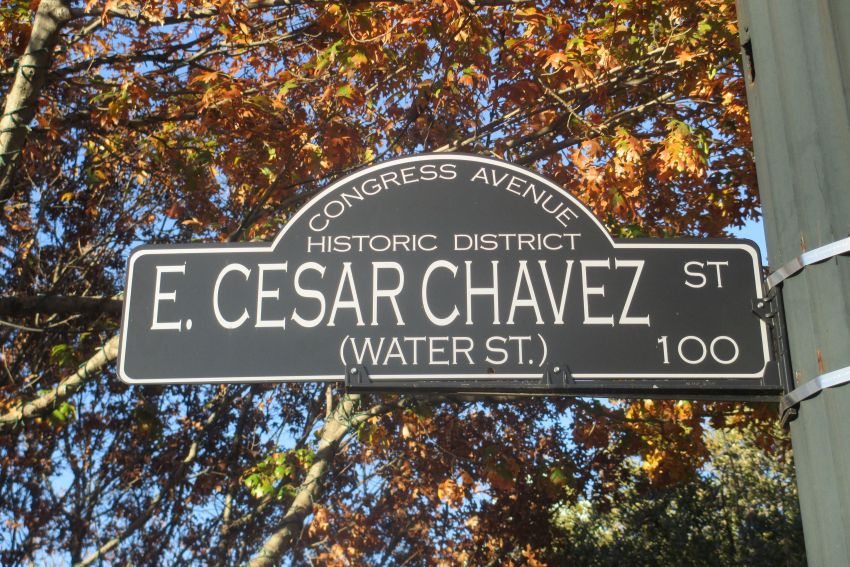
Much change has occurred in the nation since the allegations, but a lot more is occurring all over the Central Valley; the place where Chavez ran his operations and affected the most people. The Central Valley’s “Fresno State University” removed their statue of Chavez, covering it up just shortly after the victims spoke out and completely removing it two days later. A ten-mile street in Fresno dedicated to Chavez known as “Cesar Chavez Blvd” is now being renamed under unanimous decision by the Fresno City Council to protect victims after being changed for Chavez in 2024.
A colorful and large mural dedicated to Chavez is in the works of being painted over at Edison High School in Fresno, once a mural with deep meaning and now a controversial piece. As the Valley is changing, other cities around the nation are following in an attempt to honor victims and survivors, shifting the nation’s perspective on Chavez drastically.
These allegations have changed the course of history, forcing people to rethink opinions on a historical figure who was best known for helping people. Cesar Chavez will forever be known for the work he did in the ‘60s but is now also seen for his actions against vulnerable people. A man best known for helping minorities, is now recognized for taking advantage of the minorities closest to him.
To read more from The Feather, visit Seniors win the 2026 powderpuff tournament and ‘It girls’ strut into spring season.